
REDO – Circular Economy in Sustainable Rehabilitation and Construction Works
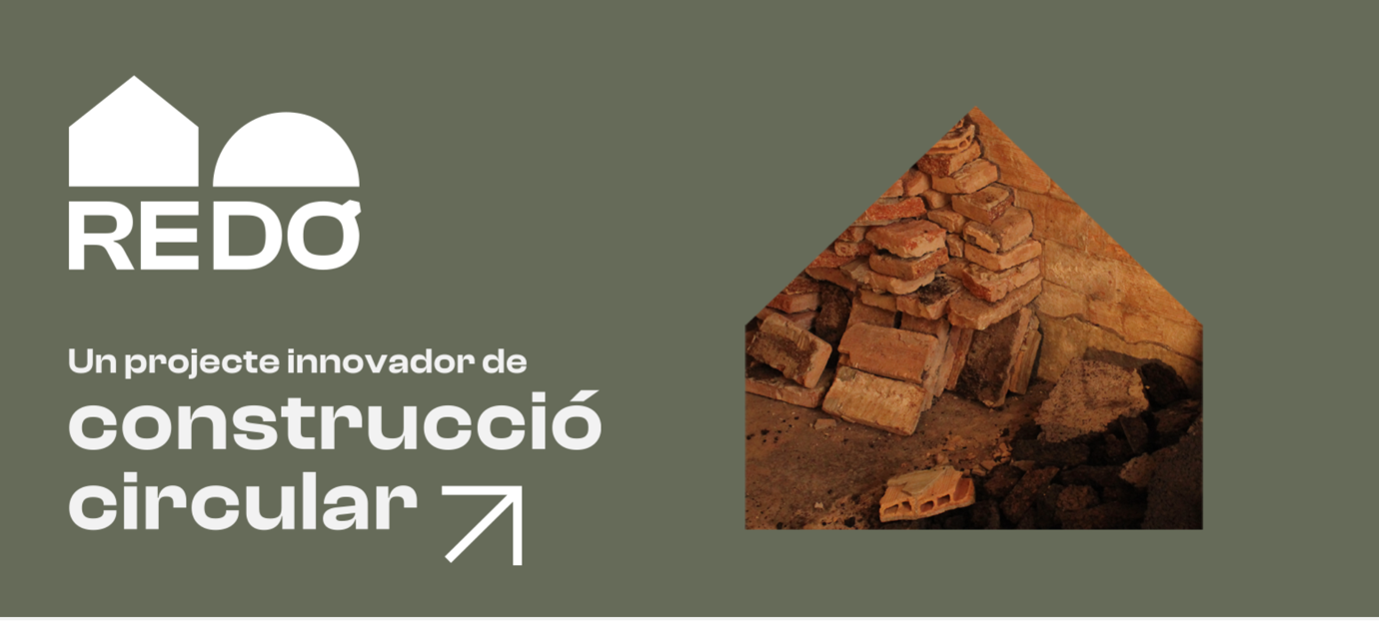
The REDÓ project promotes the circular economy in rehabilitation works through the recovery and reuse of construction materials, integrating deconstruction solutions, waste valorization, and social impact generation through training and inclusive employment.
Location
Catalonia (Spain)
Year of Start
2022
Beneficiaries
Companies in the construction and rehabilitation sector, young people in vulnerable situations in work insertion processes, and the urban environment where circular construction criteria are applied.
Objective
The REDÓ project aims to promote the circular economy in the construction and rehabilitation sector, fostering the recovery, reuse, and valorization of construction materials traditionally treated as waste, while generating positive social impacts linked to training and employment.
The initiative integrates circularity criteria from the design phase of the works, reducing the environmental impact of the sector and promoting new, more sustainable construction models.
Project description
REDÓ is an initiative promoted by SaóReformes, an entity dedicated to the rehabilitation of spaces as a tool for socio-laboral inclusion for young people in vulnerable situations and the revitalization of the local economy.
The project applies principles of circular construction through:
- Selective deconstruction strategies in the works.
- Selective collection, valorization, and reuse of materials from renovations.
- Integration of own infrastructures as a rubble manager, green point, and recycling plant.
In addition, REDÓ collaborates with local suppliers and organizations aligned with sustainability values, reducing emissions associated with the transport of materials and strengthening local value chains.
Methodology and lines of action
- Implementation of innovative deconstruction solutions.
- Valorization and reuse of construction materials.
- Collaboration with local agents in the sector.
- Carrying out energy and environmental audits to detect opportunities for improvement.
- Integration of environmental and social criteria in each rehabilitation project.

Results obtained
- Reduction of the environmental impact of rehabilitation works.
- Promotion of the market for reused materials.
- Generation of local alliances around the circular economy.
- Creation of opportunities for training and inclusive employment.
- Contribution to the decarbonization of the construction sector.
To highlight
- Real and operational application of the circular economy in rehabilitation works.
- Integration of environmental and social impact in the same project model.
- Practical, replicable approach aligned with urban sustainability policies.