
Project for the Use of Woody Resources and Regenerated Water from l’Ametlla de Mar
This project aims to optimize the use of underutilized natural resources, such as pruning waste to convert them into usable biomass, and regenerated water for crop irrigation and aquifer recharge.
Location
Terrassa, Vallès Occidental, Catalonia (Spain)
Year of Start
2024
Promoter
City Council of l’Ametlla de Mar
Beneficiaries
Local farmers, plant waste managers, the biomass sector, and the municipality of l’Ametlla de Mar as a whole.
Objective
The project aims to maximize the use of local natural resources—woody waste and regenerated water—to promote a circular, resilient, and sustainable economy in the municipality of l’Ametlla de Mar.
The initiative combines the valorization of biomass from pruning remains and plant waste with the reuse of regenerated water from the municipal treatment plant, currently discharged into the sea, to improve agricultural productivity, reduce environmental risks, and strengthen local economic activity.
Project description
Valorization of woody waste
The creation of a structured system for collecting pruning remains from gardens, urban areas, and agricultural areas is proposed, destined for a biomass logistics center. In this center, the waste will be:
- Shredded
- Screened
- Dried
- Transformed into value-added biomass products such as:
- Mulching
- Compost
- Biochar
This system will reduce uncontrolled waste burning, decrease the risk of forest fires, and improve the health of agricultural soils through the application of organic products.
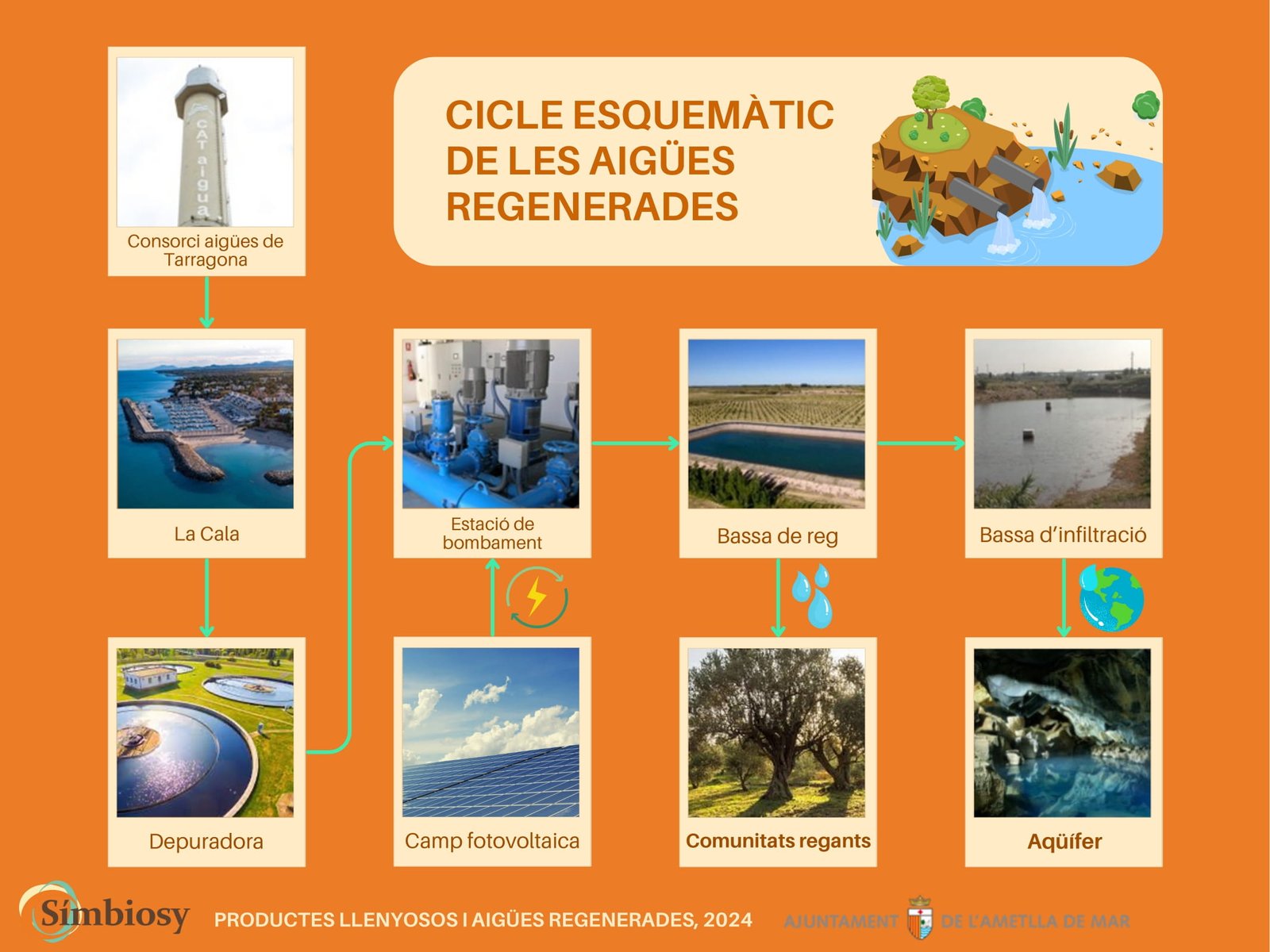
Use of regenerated water
The project contemplates the reuse of regenerated water from the municipal treatment plant to create a supporting irrigation infrastructure intended for approximately 1,500 hectares of olive groves.
The system includes:
- Pipeline network to agricultural areas
- Pumping station powered by solar energy
- Regulation and storage pond
This model will allow:
- Increase agricultural productivity in a context of water stress
- Reduce pressure on external water resources
- Contribute to aquifer recharge and prevent saline intrusion
For its proper management, the creation of a new irrigation community is promoted, fostering collaboration between farmers and ensuring efficient use of the resource.
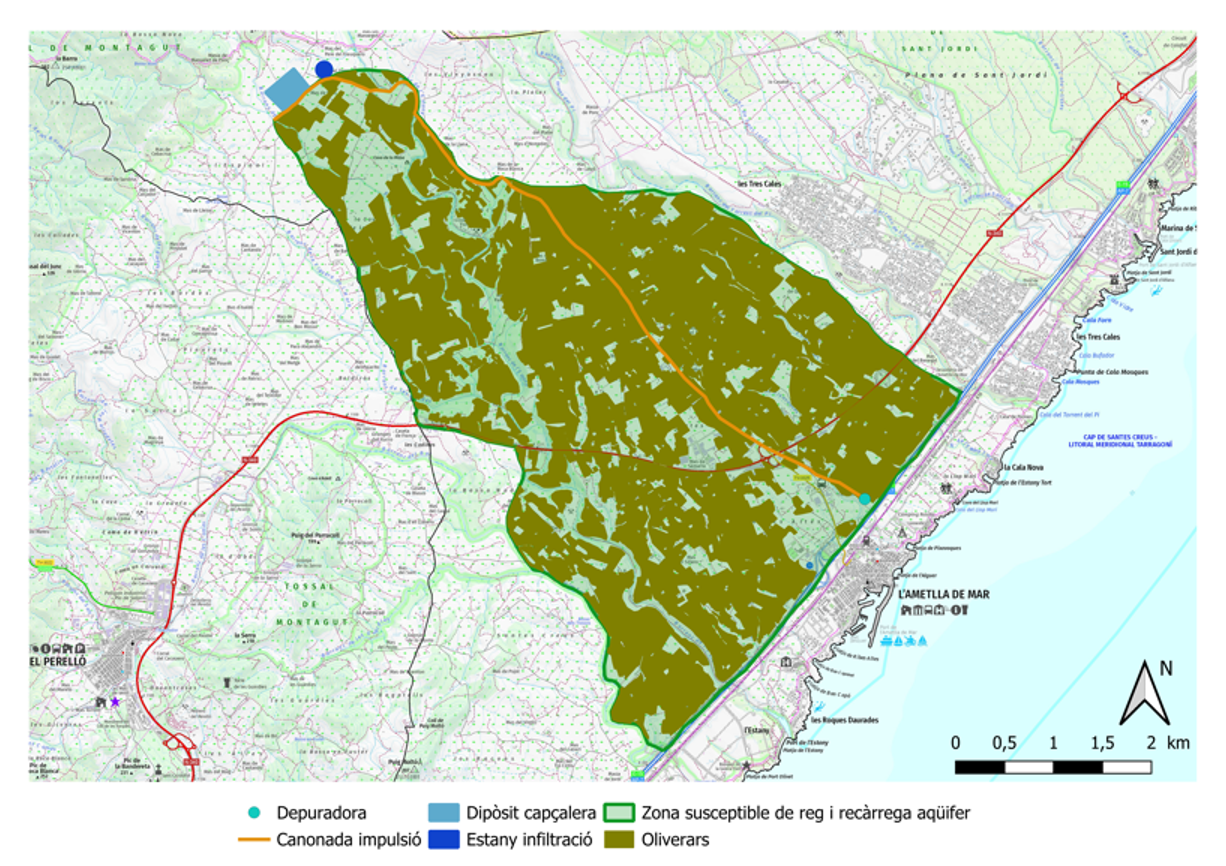
Results obtained
- Biomass valorization logistics center for the processing of plant remains.
- Integrated system for the reuse of regenerated water for agricultural irrigation and aquifer recharge.
- Reduction of plant waste and improvement of forest and agricultural management.
- Increase in agricultural productivity in olive crops.
- Generation of local employment linked to the management of biomass, waste, and irrigation systems.
To highlight
- Comprehensive model that combines biomass + regenerated water in a single territorial strategy.
- Reduction of the risk of forest fires through the valorization of pruning remains.
- Improvement of water resilience in a territory affected by climate change.
- Creation of local economic value from underutilized resources.
- Project aligned with the objectives of circular economy, bioeconomy, and ecological transition.
- Contribution to the economic revitalization of a territory affected by the closure of nuclear power plants.