
BERGUEDÀ RENOVABLES – Potential Study of Renewable Energies in Berguedà
Analysis of the potential for generating renewable energies in the Berguedà region and the feasibility of their implementation, as well as the economic, social, and environmental impact it would have on the decarbonization of industry and the territory.
Location
Berguedà Region (Barcelona)
Year of Start
2023
Promoter
Agència de Desenvolupament del Berguedà (ADBerguedà)
Participants
Agència de Desenvolupament del Berguedà · Public and private stakeholders of the territory · SÍMBIOSY
Objective
The Berguedà Renovables project aims to comprehensively analyze the potential for generating renewable energies in the Berguedà region and its capacity to cover the current energy consumption of the territory.
Based on the study of energy flows, available local resources, and consumption patterns, the project allows building a territorial energy balance, identifying opportunities to replace fossil fuels with local renewable resources, and defining strategic lines to move towards a more self-sufficient, competitive, and decarbonized energy model.
SÍMBIOSY develops the analysis by combining territorial, energy, and production data (land uses, available biomass, organic waste, solar and wind resources, aggregate consumption, and business censuses), using methodologies and calculation tools that allow accurately estimating the generation potential and its technical feasibility.
Results obtained
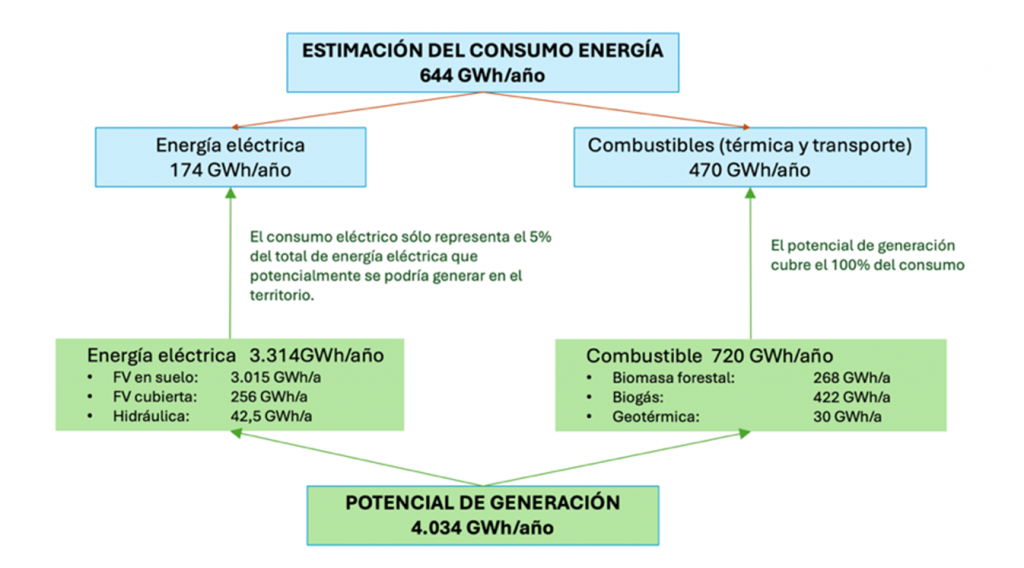
- Elaboration of the energy balance of Berguedà, quantifying electrical and thermal consumption of the entire territory.
- Identification of a renewable generation potential much higher than the current energy consumption of the region.
- Estimation that the potential of renewable energy from own resources could cover up to 100% of thermal and fuel consumption, if the appropriate systems were implemented.
- Identification of a photovoltaic potential significantly higher than the current electrical consumption of the region.
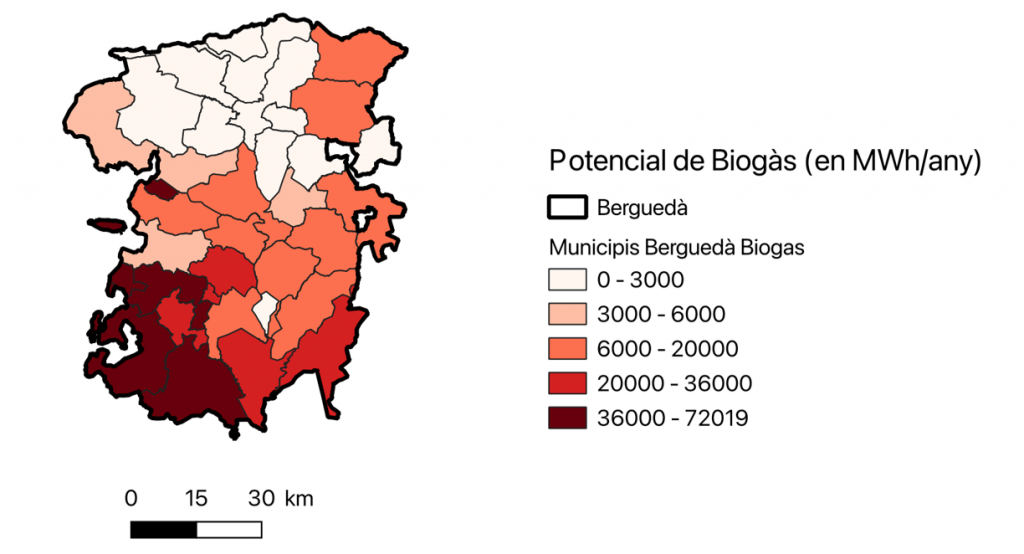
- Evaluation of the potential for energy generation from forest and agricultural biomass, biogas, and geothermal energy.
- Technical basis for defining energy transition and decarbonization strategies for the productive fabric and the territory.
To highlight
- Berguedà has a wide diversity of local resources for the generation of renewable energy: agricultural and forest biomass, livestock waste, agri-food by-products, sewage sludge, and municipal organic fraction.
- Identification of key technologies for energy recovery: biomass boilers, anaerobic digestion (biogas), photovoltaics, and other complementary solutions.
- Methodology based on territorial data and calculation models that allows making strategic decisions with a solid technical basis.
- Project aligned with the objectives of energy transition, decarbonization, and local economic development, especially relevant for rural and mountain territories.